In the age of AI, the landscape of knowledge is shifting. Once upon a time, answers were the gold standard—difficult to mine and valuable to hold. But now, with AI making answers abundant and cheap, the real treasure lies in the art of the question. And this is where we find ourselves at a unique …
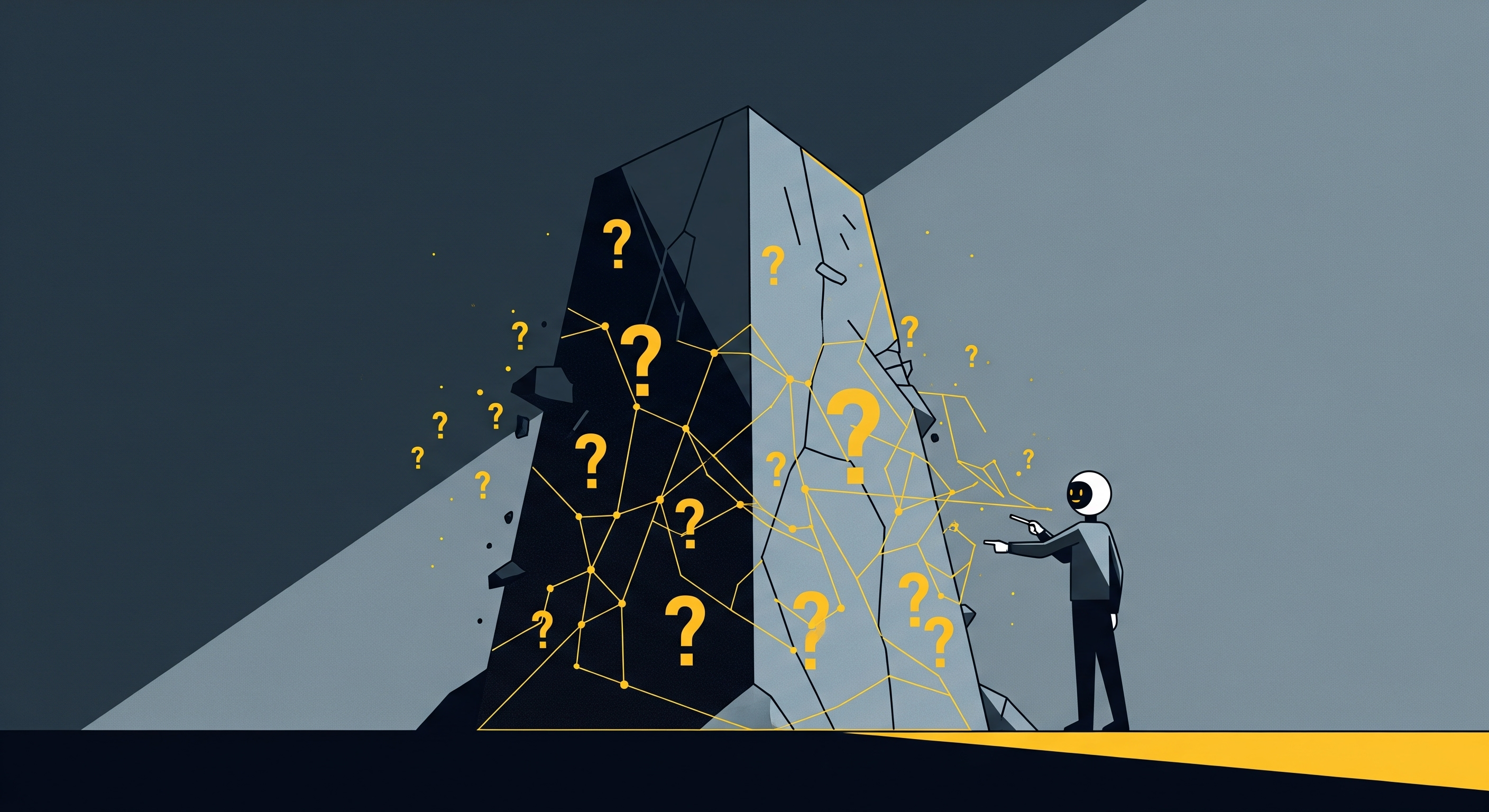
In the age of AI, the landscape of knowledge is shifting. Once upon a time, answers were the gold standard—difficult to mine and valuable to hold. But now, with AI making answers abundant and cheap, the real treasure lies in the art of the question. And this is where we find ourselves at a unique moment: reframing questions to reflect an optimistic view of human nature.
The story we’re telling is an ancient one, rooted in the idea that maybe all of humanity once huddled around a fire in a cave. From that starting point, all the struggles and animosities we see today might just be remnants of the challenges our ancestors faced as they evolved into modern life.
By posing the question this way, we’re not asking who’s at fault or why conflicts arise. Instead, we’re asking if we can view our current era as a natural part of a long evolutionary journey. And if we do that, we naturally approach our differences with more optimism, more cooperation, and a sense that we’re all just moving toward a better future together.
In short, if answers are cheap, then the questions we ask become priceless. And the most powerful questions are those that see human nature not as something broken, but as something inherently capable of growth and goodness.
Join the Club
Like this story? You’ll love our Bi-Weekly Newsletter