As AI advances at an accelerating pace, humanity finds itself at a crossroads between immense progress and critical ethical responsibility. The convergence of AI with human society raises profound questions, not only about its technical capabilities but about its philosophical and societal implications. At its most ambitious, AI has the potential to unify humanity's collective …
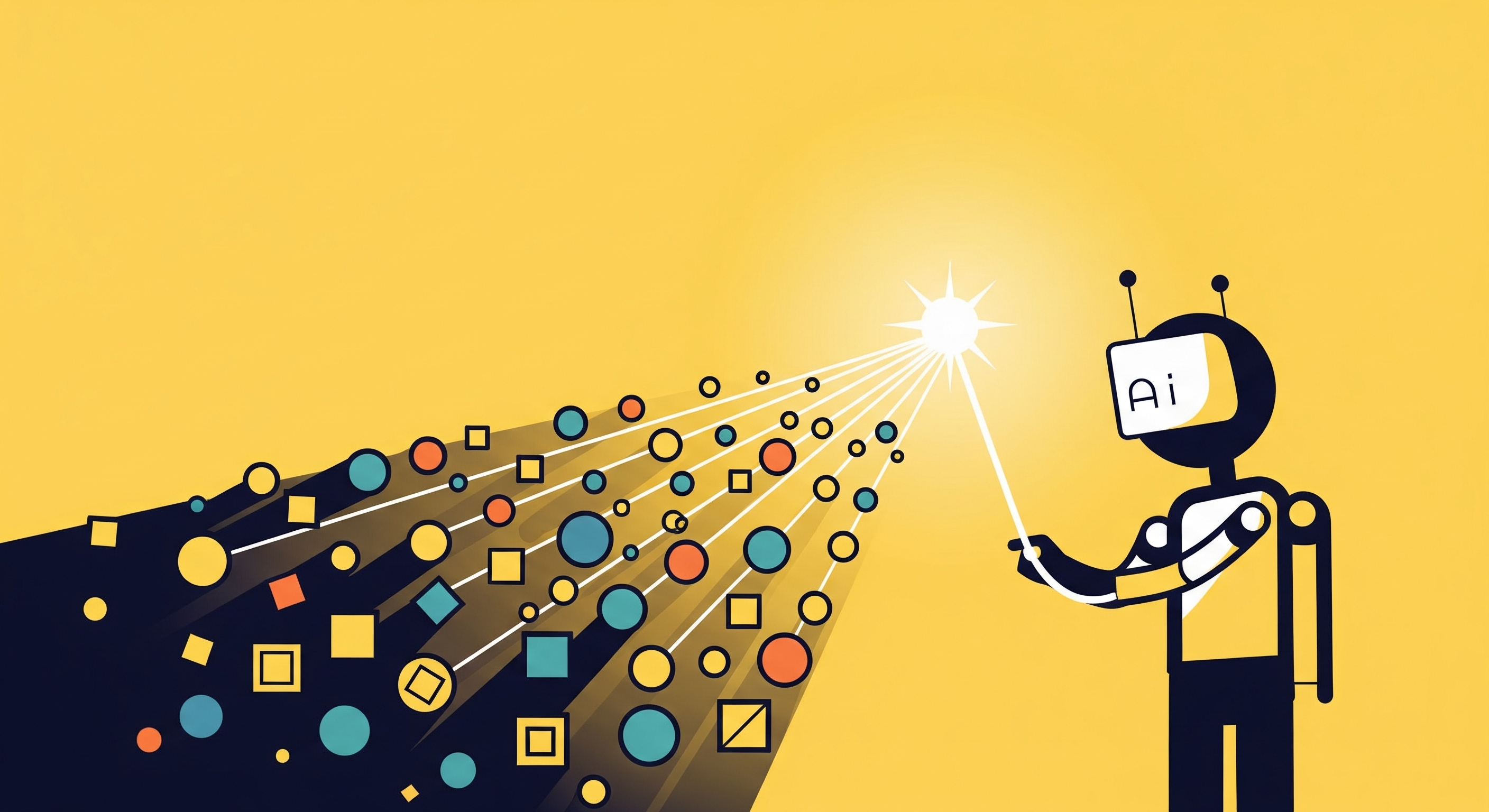
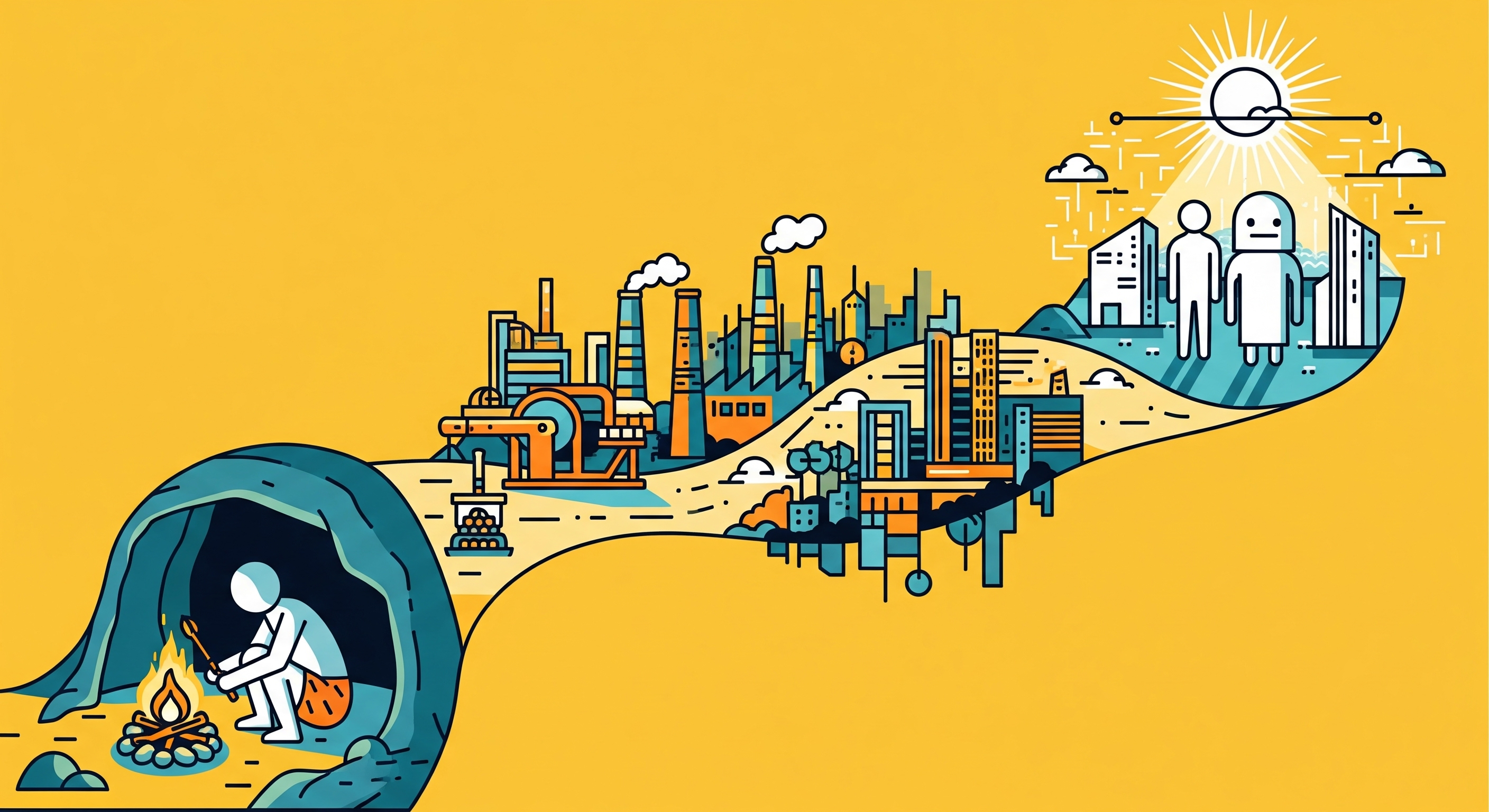
As AI advances at an accelerating pace, humanity finds itself at a crossroads between immense progress and critical ethical responsibility. The convergence of AI with human society raises profound questions, not only about its technical capabilities but about its philosophical and societal implications. At its most ambitious, AI has the potential to unify humanity’s collective consciousness, offering a vision of the future where data-driven insights lead to greater cooperation, understanding, and shared prosperity. This vision isn’t merely speculative—it represents the natural evolution of technology, moving towards a more integrated, interconnected, and most profoundly, a cross-correlation fact-checked world. While many, including leaders like Eric Schmidt, express concerns about AI being a tool for generating weapons or advancing military applications, or simply for perpetuating greed, these fears often overlook the true direction AI is heading. AIs next major step is the cross-correlation of data from diverse sources, including the vast data stores housed in server farms around the world. This immense pool of information will make it increasingly difficult for anyone to manipulate reality or hide self-interests. As large language models (LLMs) are tasked with analyzing these datasets, they will provide more transparent answers, reflecting an honest view of what truly serves and summarizes humanity’s collective self-interest this sense, the future of AI isn’t one where technology leads to greater division or destruction, but one where it offers a clearer understanding of shared human needs. Just as in nature, where planets maintain their orbits and energies align to prevent collisions, AI will operate based on the inherent logic of alignment. The insights it generates will guide people toward decisions that are beneficial not only for themselves but for society as a whole. As we become more aware of the interconnections between our actions and the broader world, the self-interest of individuals and nations will naturally align, leading to cooperation rather than conflict.This transformation is not just about technological evolution but also about human nature. As society becomes more aware of the role AI can play in aligning human actions with greater goals, it can shift industries, including those historically tied to warfare and fossil fuels. This shift would see industries redirect their focus, using their resources and influence not for destruction, but for peace and sustainable growth. The biblical notion of turning swords into plowshares might soon become a reality, as industries and governments come to realize that collaboration, sustainability, and technological advancement offer more prosperity than conflict and competition.The impact of this transition will be profound, ushering in an age of abundance, peace, and prosperity, propelled by AI powered by renewable energy. One of the key areas of change will be in the global energy landscape. The democratization of energy—through microgrids, electric vehicles, and time-of-use arbitrage—will redefine how we think about energy production and consumption. Microgrids will no longer be a luxury; they will be a necessity. As individuals and communities take control of their energy resources, empowered by AIs ability to optimize energy flow, predict demand, and manage diverse sources, they will have the power to profit from their own sustainability efforts. This shift will be further amplified as renewable energy infrastructure becomes more abundant and cheaper, making energy independence not just a goal but a reality for every nation in the world. In this new world, the value of real estate will also shift. People will begin to prioritize sustainability as much as location. A property’s access to a strong microgrid or renewable energy infrastructure will become as important as its proximity to schools, workplaces, and public amenities. Real estate will no longer be defined solely by geography but by its connection to sustainable and self-sufficient systems, leading to a more equitable distribution of resources where access to clean energy, potable water, and sustainable living becomes a universal right rather than a luxury. Moreover, as industries and nations come together to address the challenges of climate disruption, access to resources like potable water and energy will become more equitable. AI-powered solutions, from optimized water purification to leak detection and smart grid management, will make these essential resources universally accessible. The evolving technologies that address these issues will become as foundational to daily life as the washing machine was to the generation after the second world war. It’s in this shift that humanity’s potential for greatness truly lies—not in grandiose revolutions, but in the quiet evolution of what’s possible. Crucially, this future includes the unhoused becoming full participants in society as consumers, doctors, and artists. The AI-powered abundance, particularly in energy and resource management, means that basic needs can be met for all, removing the immediate struggle for survival. AI-driven personalized education platforms, accessible through ubiquitous, energy-efficient devices, will provide tailored learning pathways, enabling rapid skill acquisition and even professional training for anyone, anywhere. AI can act as an invaluable tool for diagnosing health conditions remotely, assisting in medical training, and democratizing access to healthcare knowledge. Furthermore, AIs ability to act as a creative partner will lower the barrier to entry for artistic expression, allowing individuals from all walks of life to unlock their creative potential and contribute to a richer cultural landscape. In this environment, the formerly unhoused will transition from recipients of aid to active contributors to the economy, fueling a virtuous cycle of prosperity and inclusion.The idea of AI as an aligning force in human society becomes even clearer when we consider the broader implications of its use in various industries. As AI helps us understand more clearly how our actions impact the environment, economies, and societies, it will encourage a shift in how businesses, governments, and individuals approach decision-making. The intersection of AI with sustainability will become not just a priority, but an inherent part of the decision-making process. By continuously analyzing data from every facet of society—from environmental conditions to human behavior—AI will provide insights that allow us to predict, adjust, and act in ways that support both our long-term survival and our collective flourishing.For industries like defense, the realignment of self-interest is especially profound. As AI exposes the unsustainable nature of conflict and the devastating impacts of militarization, it becomes increasingly clear that the future of warfare is not in weapons but in innovation for peace and sustainability. The gradual but inevitable transition away from military dominance toward more peaceful, cooperative industries mirrors a broader shift toward human well-being. The same technologies that could once be used to destroy can, with thoughtful reorientation, contribute to improving health, energy systems, and the environment. This represents the next phase of human evolution—not as a call to arms, but as a call to responsibility, wisdom, and shared progress and opportunity. At the heart of this evolution is a powerful recognition: that humanity’s self-interest is not inherently at odds with the greater good. As we build AI systems capable of understanding and cross-correlating vast amounts of data, we will realize that what is good for the individual is also good for the collective. The alignment of self-interest with the interests of others is a fundamental law of nature, one that AI will help bring into sharper focus. Just as the planets in our solar system maintain their orbits because of the underlying laws of physics, human actions will increasingly align with the greater good due to the transparency and clarity offered by AI’s insights. This evolution does not represent an idealized utopia, but a recognition of the natural order: that human beings, when given the proper tools, will choose cooperation over conflict. We see evidence of this in the way societies have evolved over time, from tribal communities to modern nation-states, and even in the collaborative efforts seen during global crises like the COVID-19 pandemic. As AI continues to evolve, it will not just be a tool for improving efficiency or productivity—it will be the key to unlocking a future where peace, prosperity, and sustainability are not just achievable but inevitable. In the end, the quiet revolution that AI promises is not just about technology. It’s about human evolution, about our collective growth as a species, and about understanding that the profitable path forward is one of alignment—alignment with each other, with nature, and with the future of our planet. As we continue to evolve, AI, powered by the abundant, clean energy of renewables, will be there, guiding us toward decisions that are in harmony with the greater good, ensuring that the future is one of cooperation, sustainability, and shared prosperity for everybody, including whatever percentage of us in earlier pre-cross-correlation times would choose to rob, cheat, and steal.
Join the Club
Like this story? You’ll love our Bi-Weekly Newsletter